Best alternative to ManyChat
Best alternative to ManyChat
If you're looking for a chatbot platform that does more than ManyChat, here’s a breakdown of five alternatives tailored to different needs:
- OpenAssistantGPT: AI-powered chatbots using OpenAI models (like GPT-4). Great for websites, offering advanced features like real-time updates and file analysis. Pricing starts at $0, with unlimited messages on paid plans.
- Chatfuel: Ideal for businesses focused on Facebook and Instagram. Easy-to-use templates but limited AI capabilities.
- UChat: Multi-channel support (WhatsApp, SMS, voice assistants) with robust features for e-commerce and payments. Steeper learning curve.
- Wati: Perfect for businesses prioritizing WhatsApp. Offers tools like shared inboxes and automation but lacks multi-channel flexibility.
- Botpress: Open-source platform for full customization. Best for technical teams needing control over chatbot infrastructure.
Quick Comparison
| Platform | Starting Price | Best For | Strengths | Limitations |
|---|---|---|---|---|
| OpenAssistantGPT | $0 (Free Plan) | AI chatbots for websites | Advanced AI, unlimited messages | Free tier capped at 500 messages/month |
| Chatfuel | Varies | Facebook/Instagram campaigns | Social media integration | Limited AI capabilities |
| UChat | Varies | Multi-channel engagement | Broad platform support | Complex interface |
| Wati | $69/month | WhatsApp-focused businesses | WhatsApp automation | Limited to WhatsApp |
| Botpress | $0 (Open-Source) | Technical teams | Full customization | Requires developer expertise |
Each platform serves specific needs. For non-technical users, OpenAssistantGPT offers a balance of features and simplicity. Developers will appreciate Botpress for its flexibility. Choose based on your business goals and technical skills.
ManyChat vs Chatfuel: Which is Better? (2025)
1. OpenAssistantGPT
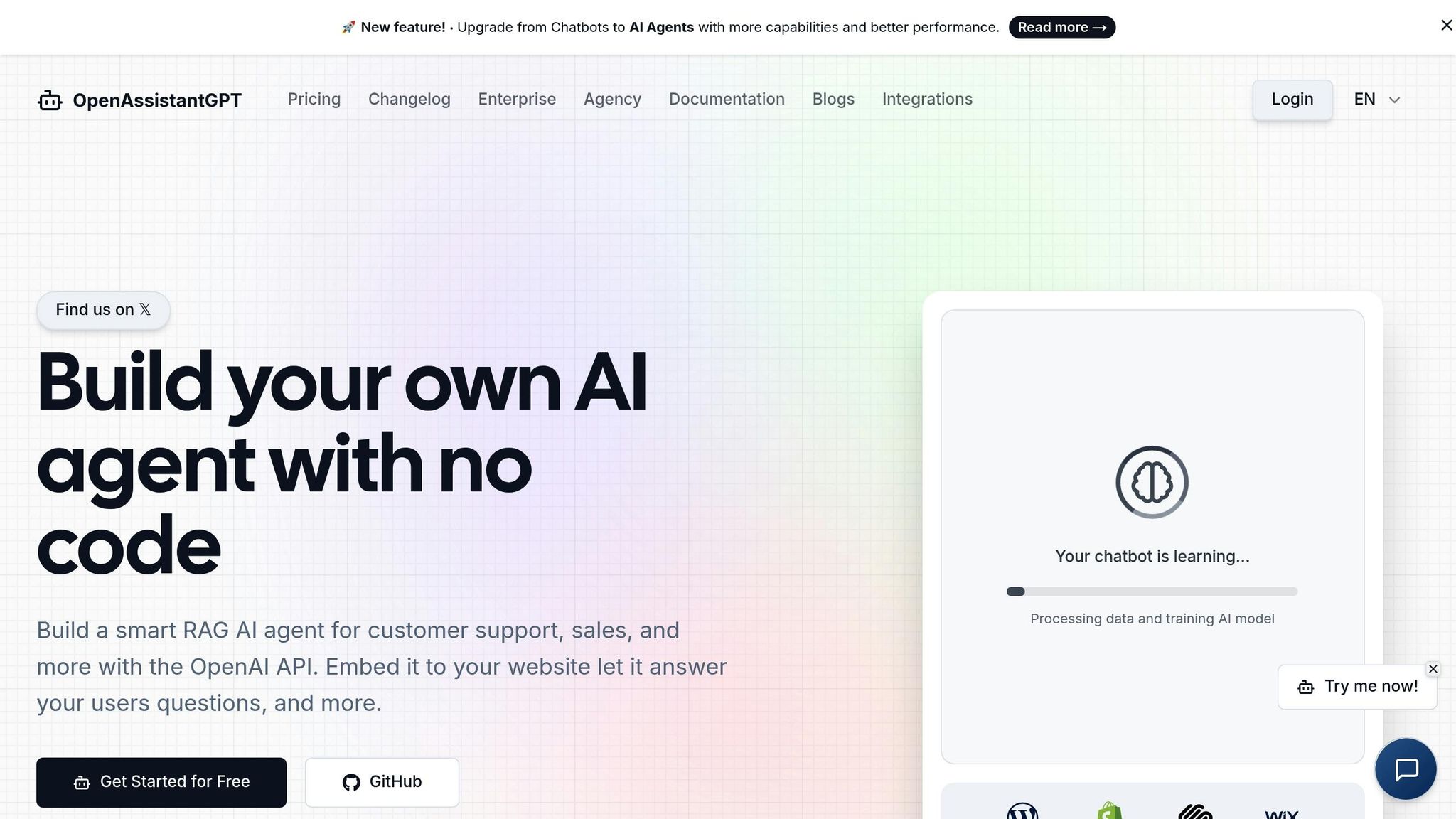
OpenAssistantGPT, built on OpenAI's Assistant API, brings advanced conversational AI to businesses, even for teams without technical expertise. Founded by Marc-Olivier Bouchard, it supports models like GPT-4, GPT-4o, and GPT-3.5, with plans to incorporate GPT-5. This platform enables businesses to create chatbots that deliver more than just scripted replies.
AI Capabilities
Using the power of OpenAI's Assistant API, OpenAssistantGPT delivers dynamic, context-aware conversations that adapt in real time. Businesses can choose between different AI models to balance speed and complexity, depending on their needs. Its web crawling feature ensures the chatbot stays up-to-date automatically, while file attachment analysis supports formats like CSV, XML, and images. The AI Agent Actions feature allows the chatbot to interact with external APIs, expanding its functionality.
These features make it easy to integrate and deploy AI-powered chatbots directly on your website.
Channel Support
OpenAssistantGPT’s design focuses on seamless website integration. It offers an open-source SDK built with NextJS and Vercel, giving developers the flexibility to customize and deploy the chatbot interface. For businesses requiring secure, private chatbots, the Enterprise plan includes SAML/SSO authentication, making it suitable for both internal use and customer-facing applications.
Integration Ecosystem
With its AI Agent Actions, OpenAssistantGPT can connect to external services through API calls. The open-source SDK provides development teams with the tools to adjust the chatbot's interface and data flow, enabling businesses to tailor the solution to their specific needs.
Pricing Structure
OpenAssistantGPT provides four pricing options:
- Free Plan ($0/month): Includes 1 chatbot, 1 crawler, 3 file attachments, 1 action, and 500 messages per month.
- Basic Plan ($18/month): Offers 9 chatbots, 9 crawlers, 27 file attachments, 9 actions, unlimited messages, lead collection, chat disclaimers, and customization options.
- Pro Plan ($54/month): Features 27 chatbots, 27 crawlers, 81 file attachments, 27 actions, unlimited messages, 5 custom domains, branding removal, and enhanced file attachment support.
- Enterprise Plan (custom pricing): Provides unlimited chatbots, crawlers, file attachments, actions, custom domains, SAML/SSO authentication, and SLA guarantees.
Both the Basic and Pro plans include unlimited messages, making costs predictable as your website traffic grows.
Customization Options
OpenAssistantGPT offers extensive customization to match your brand’s identity. You can adjust colors, fonts, and positioning of the chatbot without needing to write code. The chat disclaimer feature helps set clear expectations for users, while the built-in lead collection tool turns your chatbot into a lead generation machine by capturing contact details during interactions. For businesses on Pro and Enterprise plans, the custom domain feature allows you to host the chatbot on your own domain, ensuring brand consistency. Additionally, the open-source SDK gives development teams the freedom to modify conversation flows and integrate the chatbot with proprietary systems for deeper customization.
2. Chatfuel
Chatfuel is a chatbot platform designed with a strong emphasis on social media, particularly thriving within Meta's ecosystem. It provides a no-code, visual interface to streamline automation for Facebook Messenger and Instagram, making it a go-to solution for boosting social media engagement. Let’s break down its AI features, channel support, and integration options.
AI Capabilities
Chatfuel specializes in automating conversations on social platforms. It employs rule-based logic and keyword recognition to manage straightforward interactions. For more advanced capabilities, Chatfuel integrates with Google Dialogflow, enabling it to process natural language and better understand user intent.
Channel Support
Chatfuel is tailored for social media, offering robust support for Facebook Messenger, Instagram, and WhatsApp. This makes it a great fit for businesses running campaigns on these platforms. However, its website chat features are fairly basic, and it offers limited support for other channels like SMS or email. This focus on social media sets Chatfuel apart from platforms that cater more broadly to web-based interactions.
Integration Ecosystem
To enhance its social media-centric approach, Chatfuel integrates with essential tools like Kommo, Zapier, Shopify, WooCommerce, Mailchimp, Google Sheets, and various payment processors. While its integrations cover the basics, they are clearly designed to support social media campaigns rather than broader use cases.
3. UChat
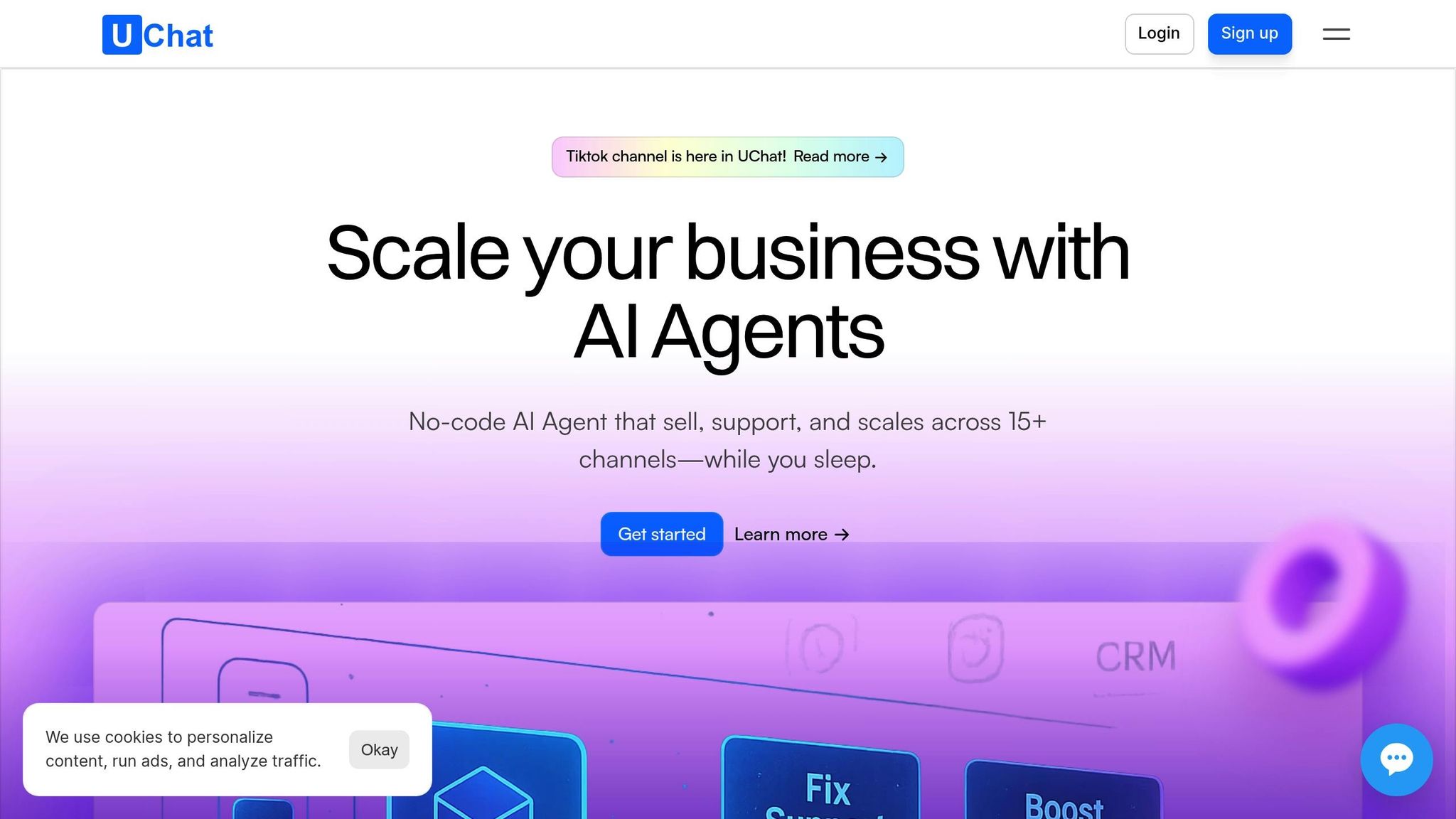
Details about UChat's features are currently not verified. For the most accurate and up-to-date information, it's best to check directly with UChat's official resources.
Up next, we’ll take a closer look at Wati to round out our platform comparison.
sbb-itb-7a6b5a0
4. Wati
Wati is designed to help B2C businesses connect with customers through WhatsApp. As an official WhatsApp Business API provider, it ensures reliable and consistent access to the platform, making it a dependable choice for businesses focused on WhatsApp communication.
The platform’s strength lies in its exclusive focus on WhatsApp. However, this narrow scope means it's not equipped to handle conversations across other channels like Instagram, Facebook Messenger, or web chat. If your business requires a broader, omnichannel approach, Wati may not fully meet your needs.
Channel Support
Wati's channel support revolves entirely around WhatsApp. This singular focus allows it to deliver strong automation features tailored for WhatsApp Business. However, the lack of native support for other messaging platforms could be a limitation for businesses running campaigns across multiple channels. That said, this streamlined approach simplifies integrations and keeps the platform focused.
Integration Ecosystem
Wati offers a straightforward integration system. It supports webhooks and Google Sheets to automate workflows and manage data efficiently. These features, highlighted in October 2025, make it easier to sync information across various tools. The webhook functionality allows businesses to send conversation data to CRMs or other systems, while the Google Sheets integration provides a simple way to monitor leads and interactions.
Pricing Structure
Wati’s focus on WhatsApp is reflected in its pricing, which includes access to the official WhatsApp Business API. After a free trial, businesses can choose from three plans: the Growth plan at $69 per month, the Pro plan at $149 per month, and the Business plan at $349 per month. While these prices are higher than many entry-level chatbot platforms, they come with added reliability and specialized features for WhatsApp. With a 4.6 out of 5-star rating from over 400 reviews, many businesses find the investment worthwhile.
Customization Options
Wati lets you tailor the text and flow of your bot’s conversations, giving you control over automated responses. However, visual customization is limited on the free plan, and upgrades are required to unlock more design flexibility. Additionally, the platform does not allow duplication of existing workflows, which means similar conversation flows for different customer segments need to be created from scratch. This can slow down development. To support users, Wati offers training videos and a shared team inbox, making it easier for teams to collaborate effectively.
5. Botpress
Botpress combines the ease of no-code platforms with the flexibility developers crave, offering a level of customization that's hard to match.
This open-source conversational AI platform gives developers direct access to its code, allowing full control over chatbot infrastructure. This means businesses can shape their bots to meet unique needs without being confined to a vendor's ecosystem.
AI Capabilities
Botpress comes equipped with advanced natural language understanding (NLU) features, enabling the definition of intents, entities, and slots. Its visual conversation builder simplifies the creation of detailed dialogue flows, while a built-in JavaScript editor lets developers write custom actions. This setup allows teams to start with basic automation and then enhance the bot's intelligence over time.
Channel Support
The platform integrates seamlessly with popular messaging services, making it easy to connect with users on their preferred platforms. However, Botpress's design prioritizes control, so setting up and maintaining these integrations often requires developer expertise. Its open architecture also supports connections with third-party systems, giving businesses even more options for building robust integrations.
Integration Ecosystem
Thanks to its open-source nature, Botpress can connect to virtually any third-party tool or system by providing full code access. Unlike platforms limited to pre-built connectors, Botpress empowers development teams to create tailored solutions that align perfectly with their business goals. The platform also fosters collaboration between developers and conversation designers, leading to more effective and user-friendly bots.
Pricing Structure
Botpress is free to use. For businesses that require additional resources or support, there's a pay-as-you-go plan that scales with usage. This pricing model makes it an appealing choice for both startups and larger enterprises. Combined with its extensive customization capabilities, Botpress is a flexible and cost-effective option.
Customization Options
Customization is where Botpress truly shines. The visual conversation builder offers an intuitive way to design chatbot workflows, while the JavaScript editor allows developers to implement complex business logic and fine-tune integrations. Its open-source architecture enables deep customization, including on-premise hosting to meet compliance requirements. For enterprises with technical teams looking for scalable, tailored solutions with full data control, Botpress provides the tools to make it happen.
Platform Comparison: Strengths and Weaknesses
Each platform brings its own set of benefits and challenges, particularly in areas like customization, ease of use, and pricing. Here’s a closer look at how they stack up:
OpenAssistantGPT offers an impressive no-code interface, making it easy for marketing teams to deploy AI-powered chatbots. Features like website crawling, file analysis, and lead collection are paired with clear pricing, starting at $0 and scaling to $18/month for unlimited messages. This makes it a strong contender for businesses looking for a ManyChat alternative. However, the free plan's 500-message monthly cap might be a hurdle for businesses experimenting with multiple use cases.
Chatfuel excels in Facebook and Instagram integration, providing visual flow builders and ready-to-use templates. However, its AI capabilities lag behind platforms using more advanced language models, leading to less dynamic conversations. It’s a great fit for businesses focused on Meta’s ecosystem, but companies with multi-channel needs might find it limiting.
UChat supports a wide range of messaging platforms, including WhatsApp, SMS, and voice assistants, and includes built-in e-commerce tools and payment processing. While its features are extensive, the platform’s steep learning curve and complex interface can be challenging for beginners. Additionally, its pricing varies based on features and channel access, making budgeting less predictable.
Wati is tailored for businesses that focus on WhatsApp, offering tools like team collaboration, shared inboxes, and broadcast messaging. These features blend automation with human interaction, making it ideal for WhatsApp-centric businesses. However, its utility is limited for companies needing broader channel support.
Botpress stands out with its open-source foundation, offering full control, custom hosting, unlimited system integrations, and a visual builder with JavaScript editing. While it’s a powerhouse for development-focused teams, its reliance on technical expertise makes it less suitable for non-technical users.
Here’s a quick comparison of the platforms:
| Platform | Starting Price | Best For | Key Strength | Main Limitation |
|---|---|---|---|---|
| OpenAssistantGPT | $0 (Free plan) | Businesses wanting AI chatbots without coding | Advanced AI with unlimited messages on paid plans | Free tier limited to 500 messages/month |
| Chatfuel | Varies | Social media-focused businesses | Strong Facebook and Instagram integration | Less advanced AI capabilities |
| UChat | Varies | Multi-channel customer engagement | Extensive channel support, including voice | Complex interface, variable pricing |
| Wati | Varies | WhatsApp-centric businesses | Specialized WhatsApp Business API features | Limited to WhatsApp ecosystem |
| Botpress | $0 (Open-source) | Development teams needing customization | Complete code access and control | Requires technical expertise |
Pricing Models
Pricing structures vary widely. OpenAssistantGPT offers straightforward monthly plans, such as $18/month for Basic (9 chatbots) and $54/month for Pro (27 chatbots). Botpress is free but follows a pay-as-you-go model, requiring developer input for setup. UChat and Wati use feature-based pricing, which can complicate cost planning.
Ease of Use
Platforms like OpenAssistantGPT and Chatfuel are designed for non-technical users, enabling them to create functional chatbots quickly. UChat, while feature-rich, demands more time to learn. Botpress, on the other hand, is best suited for teams with technical expertise.
Customization
Customization capabilities differ significantly. Botpress provides unmatched flexibility with its open-source model and code access. OpenAssistantGPT offers adaptable AI Agent Actions for API connections. Chatfuel and Wati allow some customization within their frameworks, while UChat strikes a balance by offering extensive configuration without requiring coding.
Integration Capabilities
Each platform focuses on specific integrations. OpenAssistantGPT connects with website platforms and supports SAML/SSO authentication. Botpress allows integration with virtually any system through custom code. UChat includes pre-built e-commerce and payment tools. Chatfuel is tightly integrated with Meta’s ecosystem, while Wati specializes in WhatsApp Business API.
Choosing the Right Platform
The best platform depends on your team’s technical skills, primary communication channels, and business goals. For businesses prioritizing speed and AI quality without coding, OpenAssistantGPT is a strong choice. Development teams looking for maximum control will benefit from Botpress. Social media-focused companies may lean toward Chatfuel, while WhatsApp-centric businesses will find Wati ideal. If broad channel support is a priority and your team can invest time in learning, UChat is worth considering.
Conclusion
When weighing the options, each platform brings its own strengths and challenges, tailored to different business needs.
OpenAssistantGPT simplifies AI integration by offering advanced features without requiring coding expertise. Its straightforward pricing and scalable plans make it ideal for deploying chatbots with web crawling and lead collection capabilities, removing technical barriers.
Botpress is a solid choice for development teams seeking full customization and control. Built on an open-source foundation, it offers flexibility but demands JavaScript knowledge and ongoing technical maintenance.
Chatfuel excels for businesses deeply rooted in Meta’s ecosystem. With its user-friendly visual builders, it’s perfect for non-technical users aiming to streamline Facebook and Instagram interactions.
Wati focuses on companies that rely heavily on WhatsApp for customer communication. Its shared inbox and broadcast tools blend automation with personalization, though its effectiveness may wane when applied to a broader range of channels.
UChat supports multi-channel communication, including WhatsApp, SMS, and voice assistants, while also offering e-commerce and payment tools. However, it requires a steeper learning curve and careful planning for its variable pricing structure.
AI-powered platforms are becoming indispensable as businesses grow, offering tools to understand customer intent, adapt to context, and lighten the load on human support teams. As highlighted, selecting the right platform depends on your current needs and ability to scale with evolving customer expectations.
To get started, consider your primary communication channel and technical expertise. OpenAssistantGPT provides a balance of power and simplicity for those deploying chatbots without coding. Botpress caters to developers seeking customization. Chatfuel is perfect for social media-focused companies, while Wati fits WhatsApp-centric operations. For businesses needing multi-channel coverage and integrated e-commerce, UChat is worth exploring.
Pick the platform that aligns with your goals and technical capabilities to stay ahead in the competitive, AI-driven customer engagement landscape.
FAQs
What should I look for when choosing a chatbot platform for my business?
When picking a chatbot platform for your business, it's important to prioritize ease of integration, scalability, and lead generation capabilities. These elements ensure the chatbot can smoothly connect with your current tools, expand alongside your business, and effectively attract and engage potential customers.
You should also evaluate how customizable the platform is, how simple the interface is to use, and whether it includes AI-powered automation to improve customer interactions. The right platform can streamline your processes, boost customer satisfaction, and deliver better outcomes for your business.
How does OpenAssistantGPT work with my current business systems and website?
OpenAssistantGPT is built to easily connect with a wide range of business systems and websites, offering a flexible way to improve customer engagement. With its no-code tools and API features, businesses can link it to CRM platforms, e-commerce systems, and other key software with little technical hassle.
From embedding it on your website to integrating it into current workflows, OpenAssistantGPT ensures a smooth setup and room for growth. This means businesses can automate processes, boost lead generation, and provide tailored customer experiences with ease.
What are the main advantages of using an open-source chatbot platform like Botpress?
Using a platform like Botpress to build your chatbot comes with several standout benefits. For starters, it offers a wide range of integration options, allowing seamless connections with your existing tools and systems. This means your chatbot can fit right into your workflows without a hitch.
Another major plus is its knowledge management capabilities, which help ensure your chatbot can handle diverse user questions with ease. Whether you're dealing with simple FAQs or more complex queries, Botpress has you covered.
What’s more, Botpress combines enterprise-level features with an interface that’s user-friendly for both developers and non-technical users. The visual builder streamlines the chatbot creation process, making it straightforward even for beginners. Plus, with an active developer community, you can count on regular updates and support. All of this makes Botpress a flexible and dependable choice for businesses, no matter their size.