What tools can i use to monitor my website's visibility in ai search?

What tools can i use to monitor my website's visibility in ai search?
If you're wondering how to track your website's visibility in AI-driven search platforms like ChatGPT, Perplexity, or Gemini, you're not alone. With AI chatbots increasingly delivering direct answers instead of linking to websites, businesses need new tools to ensure their brands are mentioned and represented accurately. Here's what you need to know:
- Why It Matters: AI platforms synthesize information without traditional web clicks, making it harder to track traffic and mentions. Over 13% of U.S. desktop searches now result in no clicks, meaning your brand could be referenced without you knowing.
- Solution: Tools designed for "Answer Engine Optimization (AEO)" help track and improve your brand's visibility in AI-generated responses.
- Key Tools: Platforms like xSeek, XFunnel, Rankscale, Writesonic, and Trackerly.AI offer features like real-time tracking, sentiment analysis, competitor benchmarking, and citation tracking.
Quick Overview of Tools:
- xSeek: Tracks mentions across 7 major AI platforms, offers real-time analytics, and integrates with popular site builders.
- XFunnel: Provides sentiment analysis, share-of-voice benchmarking, and hallucination detection to spot inaccuracies in AI responses.
- Rankscale: Budget-friendly with competitor analysis and actionable insights for small businesses.
- Writesonic: Tracks prompt-level analytics across 10+ AI platforms and offers share-of-voice benchmarking.
- Trackerly.AI: Flexible credit-based system for tracking across 7 AI models with localization options.
Quick Comparison
| Tool | AI Platforms Covered | Key Features | Starting Price |
|---|---|---|---|
| xSeek | ChatGPT, Claude, Perplexity, etc. | Real-time tracking, Brand Radar | N/A |
| XFunnel | ChatGPT, Gemini, Claude, etc. | Sentiment analysis, hallucination detection | Freemium ($0+) |
| Rankscale | ChatGPT, Perplexity, Google AI | Competitor analysis, actionable insights | $20/month |
| Writesonic | 10+ platforms | Prompt-level tracking, citation gap analysis | N/A |
| Trackerly.AI | 7 platforms | Localization, position tracking | $97/month |
To stay ahead, start with free trials or affordable plans and monitor how your brand appears in AI-generated answers. These tools are essential for shaping your visibility in the AI-driven search landscape.
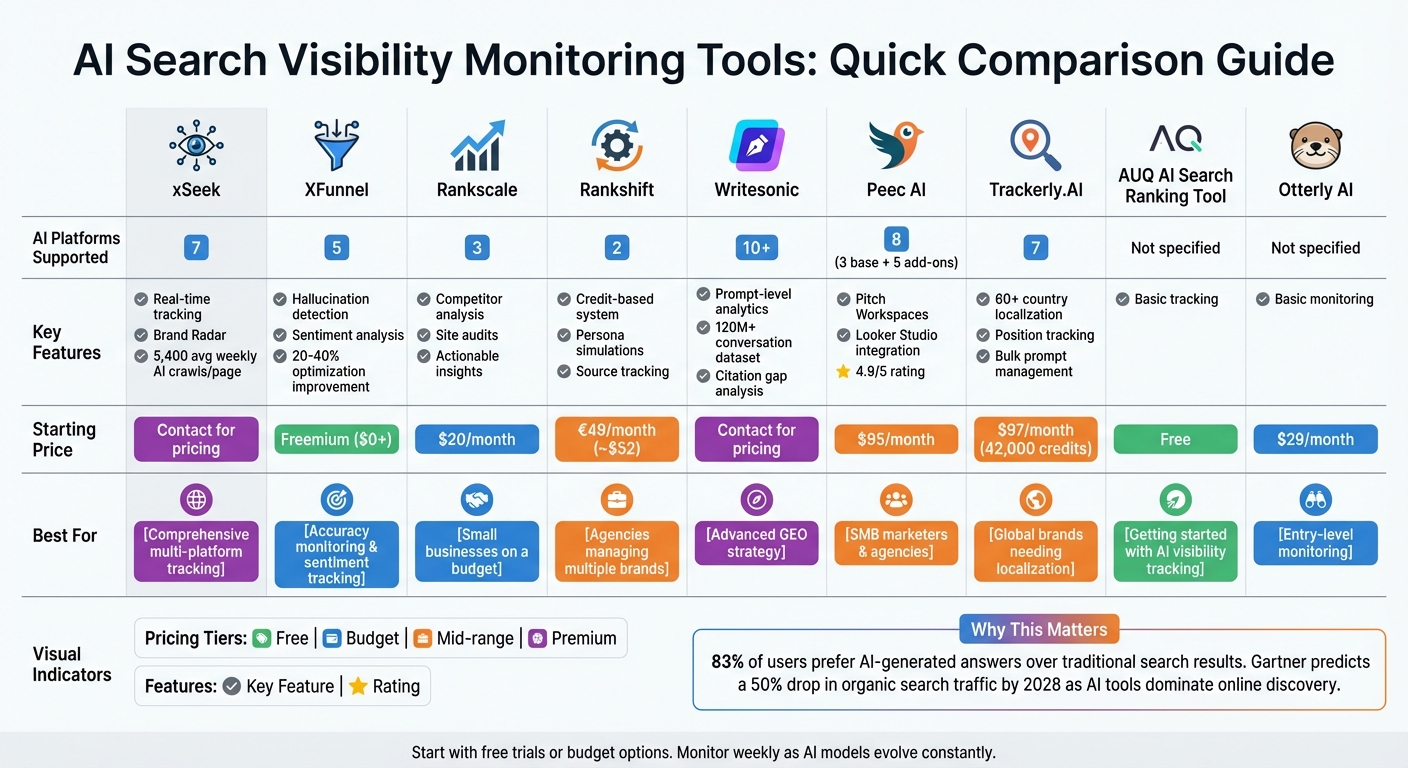
AI Search Visibility Monitoring Tools Comparison Chart
Best AI Search Visibility Tools You Can't Ignore This Year
1. xSeek
xSeek is a powerful platform designed to track your brand's presence across the ever-expanding world of AI-driven search. It monitors your website’s visibility across seven major AI platforms: ChatGPT (OpenAI), Claude (Anthropic), Perplexity, xAI, Meta, Cohere, and Mistral. This broad coverage ensures your brand’s mentions are captured from all the major AI assistants that users rely on. With this level of monitoring, xSeek provides invaluable real-time insights into your AI footprint.
Real-time Tracking and Analytics
xSeek's AI Tracking Dashboard offers live updates on how often AI systems interact with your site and mention your brand. One standout feature is its ability to track the "GPTUser" user agent, which specifically identifies visits from ChatGPT - data that traditional analytics tools often overlook.
The platform’s optimization strategies deliver notable results. For example, individual pages can receive an average of 5,400 live AI crawls each week. This ensures that no AI-generated mention of your brand slips through the cracks, bridging the gaps left by conventional tracking tools.
Advanced Visibility Insights
xSeek's Brand Radar goes beyond just tracking mentions; it also identifies the topics that prompt these mentions. This allows you to measure your visibility against competitors and uncover areas where your content may be lacking. Additionally, the Indexed Content Analysis tool pinpoints which pages on your site are drawing the most attention from AI crawlers, giving you a clear picture of what’s working and where to improve.
Seamless Integration with Other Platforms
To make things even more efficient, xSeek integrates with popular platforms like Cloudflare, WordPress, Wix, HTML, Next.js, and Framer. Through these integrations, it provides actionable recommendations for Answer Engine Optimization, all based on real-time data.
2. Relixir
At the moment, there isn't much verified information available about Relixir's features or the platforms it supports. It's unclear if Relixir tracks key AI platforms like ChatGPT, Perplexity, or Claude, or whether it offers real-time tracking, integration capabilities, or any standout functionalities. To get accurate details, it's best to reach out to the vendor directly. Ask about the specific AI platforms it monitors, how it collects data, and what integration options are provided. Look for clear documentation or case studies to help you evaluate whether this tool meets your needs for AI search visibility.
3. XFunnel
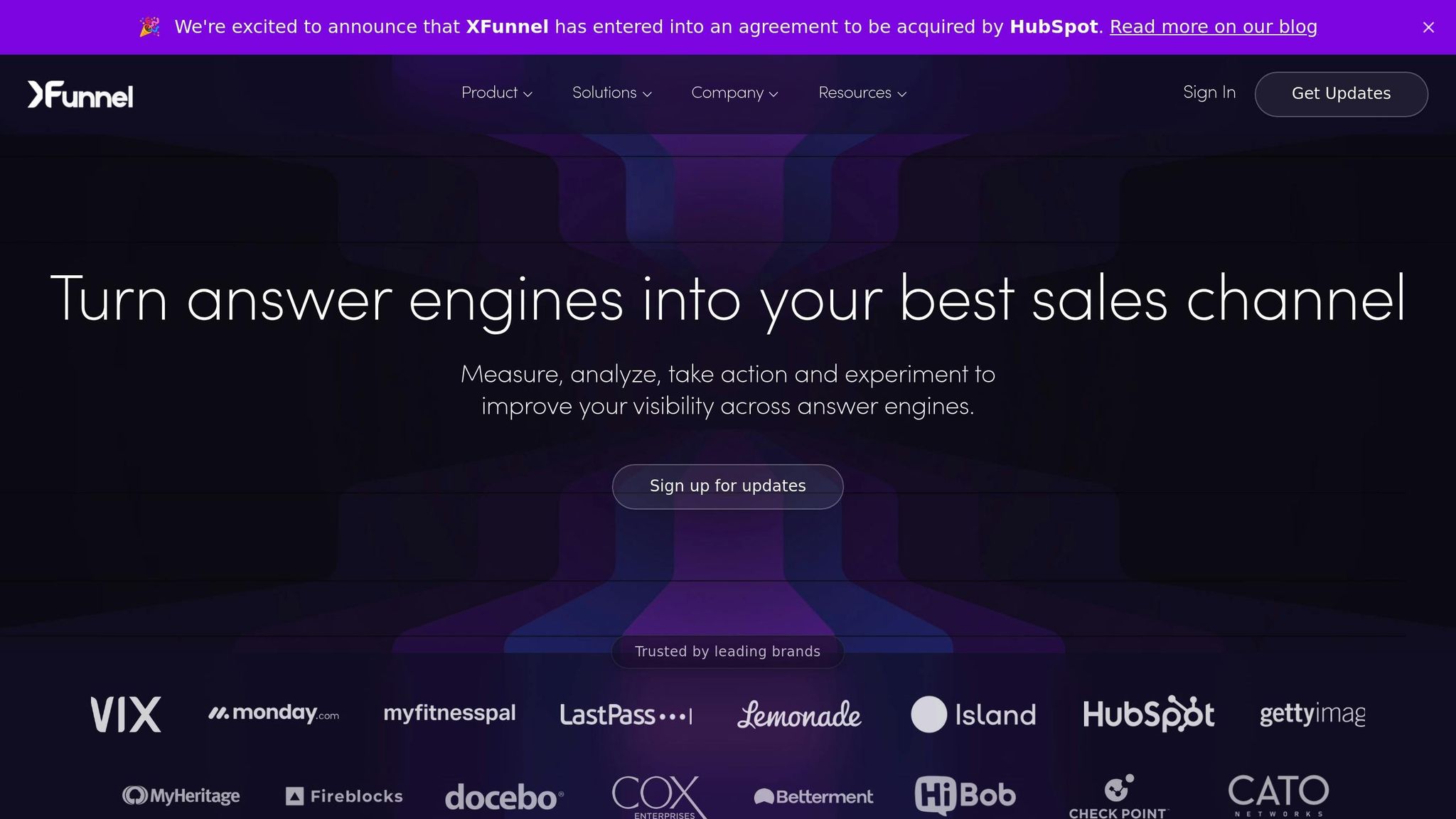
XFunnel is a cloud-based platform available on a freemium model, designed to monitor your brand's visibility across five major AI search engines: ChatGPT, Perplexity, Gemini, Claude, and AI Oracle. Recently, the company announced its acquisition by HubSpot, paving the way for deeper integration with marketing tools.
Real-time Tracking and Analytics Capabilities
XFunnel's stream processor is built for speed and precision, flagging keyword and sentiment trends within minutes. It processes millions of queries daily to capture real-time AI-generated responses, ensuring the dashboard reflects what users actually see.
"Our stream processor flags keyword or sentiment spikes within minutes - faster than most trend-tracking suites highlighted by analysts - so you act while the wave is growing, not fading." - XFunnel
Advanced Features: Sentiment Analysis, Share-of-Voice, and Citation Tracking
In addition to real-time tracking, XFunnel stands out with its robust analytical tools. One highlight is its hallucination detection feature, which identifies inaccuracies in AI-generated information about your brand or products, helping to prevent misinformation. The platform tracks a "Hallucination Score" across 270,000 queries from 437 companies, offering a clear picture of how accurately AI represents your brand.
XFunnel also allows you to benchmark your share of voice against competitors across various regions, topics, and customer personas. Its detailed citation analysis pinpoints which high-value content sources are driving your visibility in AI responses.
The platform's optimization playbooks have demonstrated measurable improvements, with results ranging from 20% to over 40% through multivariate testing. Additionally, XFunnel offers persona-specific mapping to evaluate how AI search engines respond to different customer profiles throughout the buying journey. This analysis helps identify gaps in conversions and benchmarks localization patterns through comprehensive citation tracking.
4. Rankscale
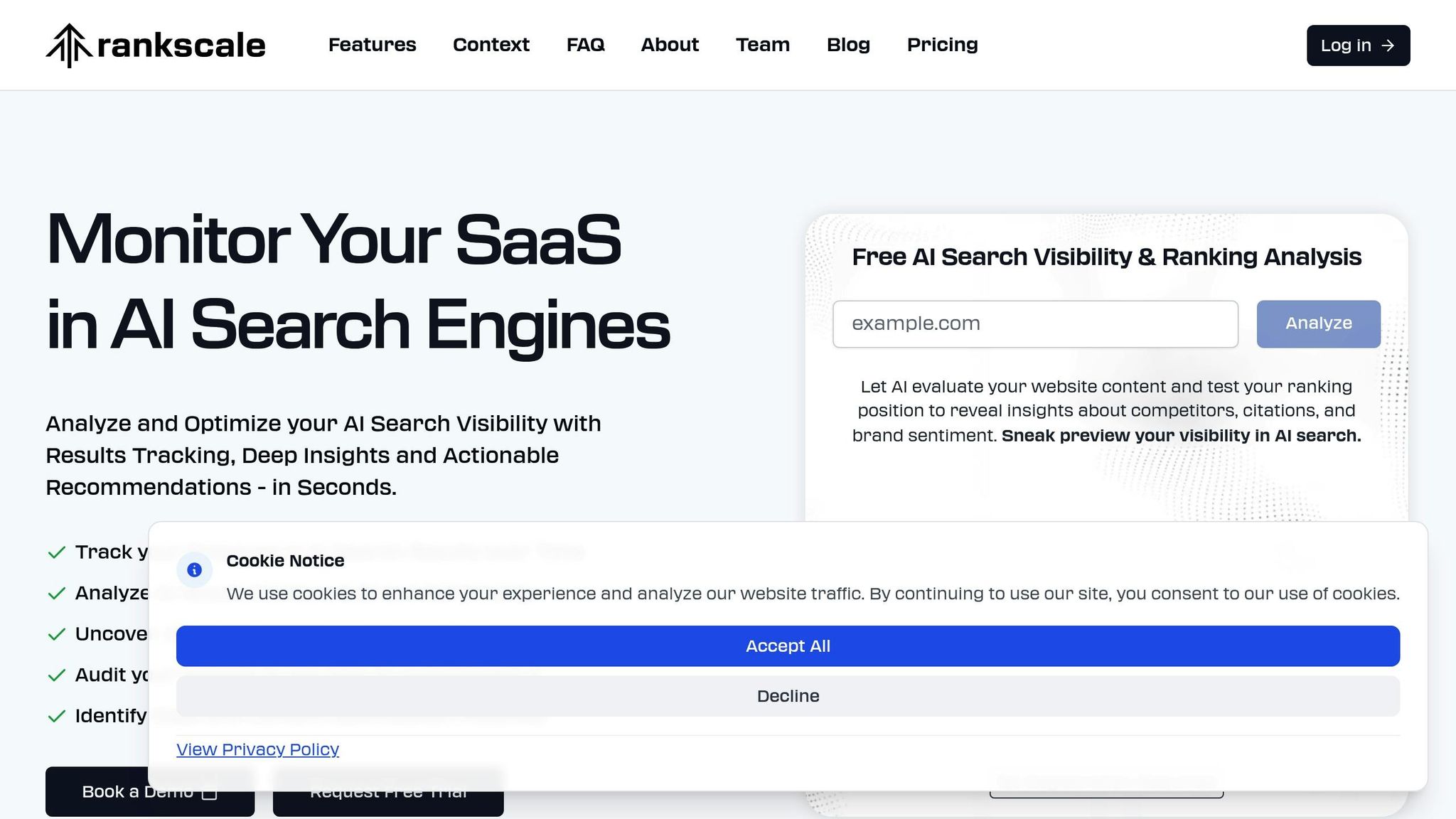
Rankscale is a cloud-based tool tailored for small businesses that want to keep tabs on their AI search performance without breaking the bank. Starting at just $20 per month, it offers an affordable way to dive into Answer Engine Optimization (AEO) and improve visibility in AI-driven search results. It’s all about delivering clear, data-focused insights to help you stand out in the AI search landscape.
AI Platform Coverage
Rankscale focuses on tracking your brand’s presence across three key AI search engines: ChatGPT, Perplexity, and Google AI (AI Overviews). By honing in on these platforms, it provides detailed and reliable performance metrics.
Tracking and Analytics Capabilities
With a dedicated dashboard, Rankscale gives you a complete picture of how AI platforms view and represent your brand. It helps you understand where you currently stand in AI-generated responses. Plus, its site audit feature identifies technical issues quickly, making it easier to address potential problems.
Standout Features: Competitor Analysis and Actionable Insights
What sets Rankscale apart is its ability to go beyond basic metrics. It not only benchmarks your performance against competitors but also provides actionable recommendations to improve your content. These insights help close content gaps and increase the chances of your brand being cited in AI-generated results.
5. Rankshift
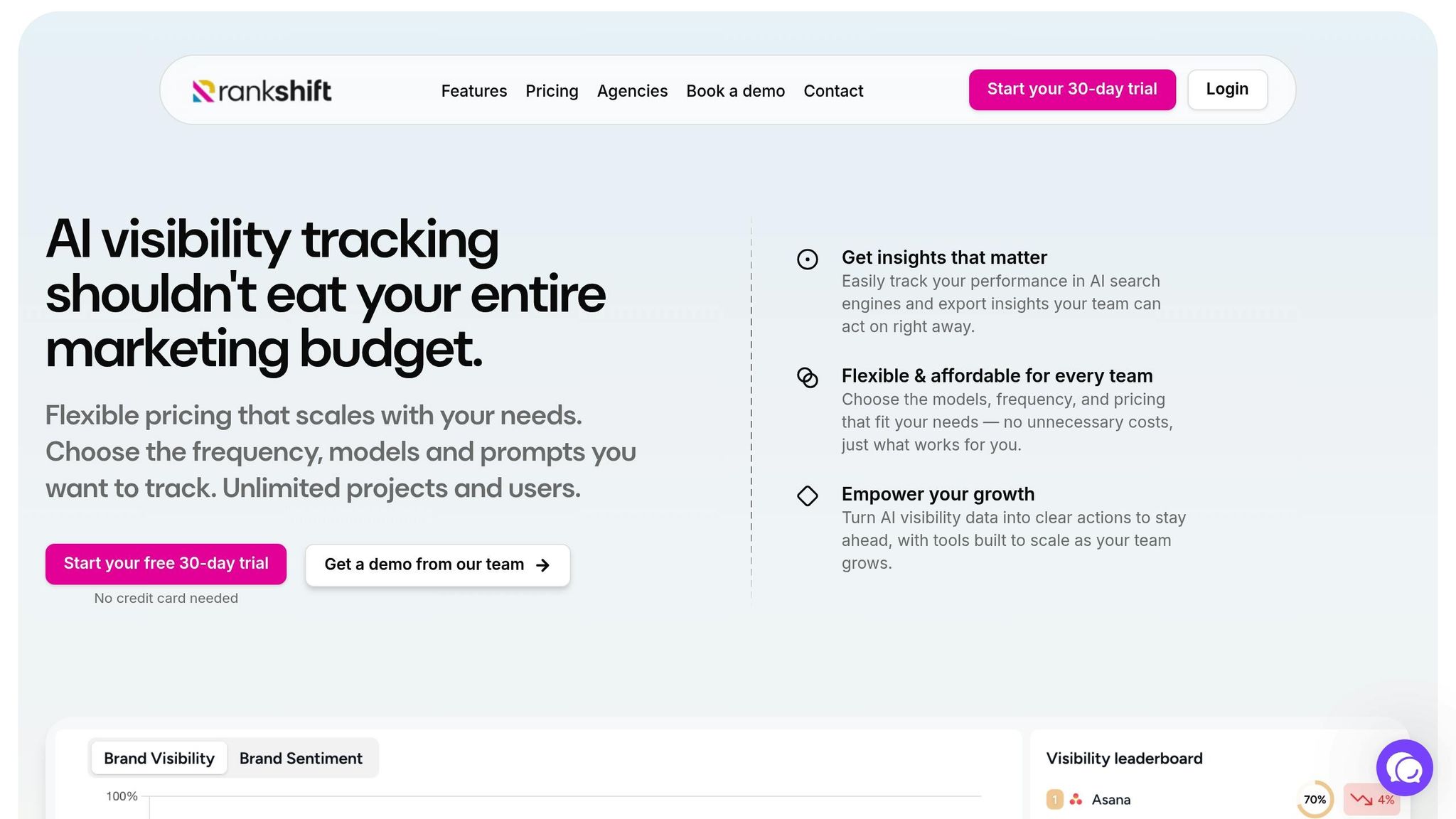
Rankshift operates on a credit-based system that’s perfect for managing multiple brands. Starting at just €49 per month (around $52), it supports unlimited users and projects - making it a strong choice for agencies or businesses handling several clients or brands at once.
AI Platform Coverage
Rankshift takes monitoring to another level by covering platforms like ChatGPT and Google AI Overviews. You can choose specific models, set custom tracking frequencies, and even simulate how AI responds to different user personas. This feature helps you understand how AI outputs shift depending on the audience profile.
Real-Time Tracking and Analytics
The platform’s credit system determines usage based on prompts, tracking frequency, and persona simulations. Want to avoid running short during peak activity? Plan ahead by purchasing an extra 20–30% in credits for added flexibility.
Integration with Tools and Platforms
Rankshift ensures smooth workflows by offering Slack support and allowing data exports. This makes it easy to integrate directly into your existing reporting systems.
Standout Features: Source Tracking and Prompt Suggestions
One of Rankshift’s standout features is its ability to track the exact sources referenced in AI-generated responses. On top of that, its prompt assistance feature helps you refine your inputs to maximize your brand’s visibility. These tools not only strengthen your AEO (Answer Engine Optimization) strategy but also work hand-in-hand with insights from other top analytics platforms.
sbb-itb-7a6b5a0
6. Writesonic
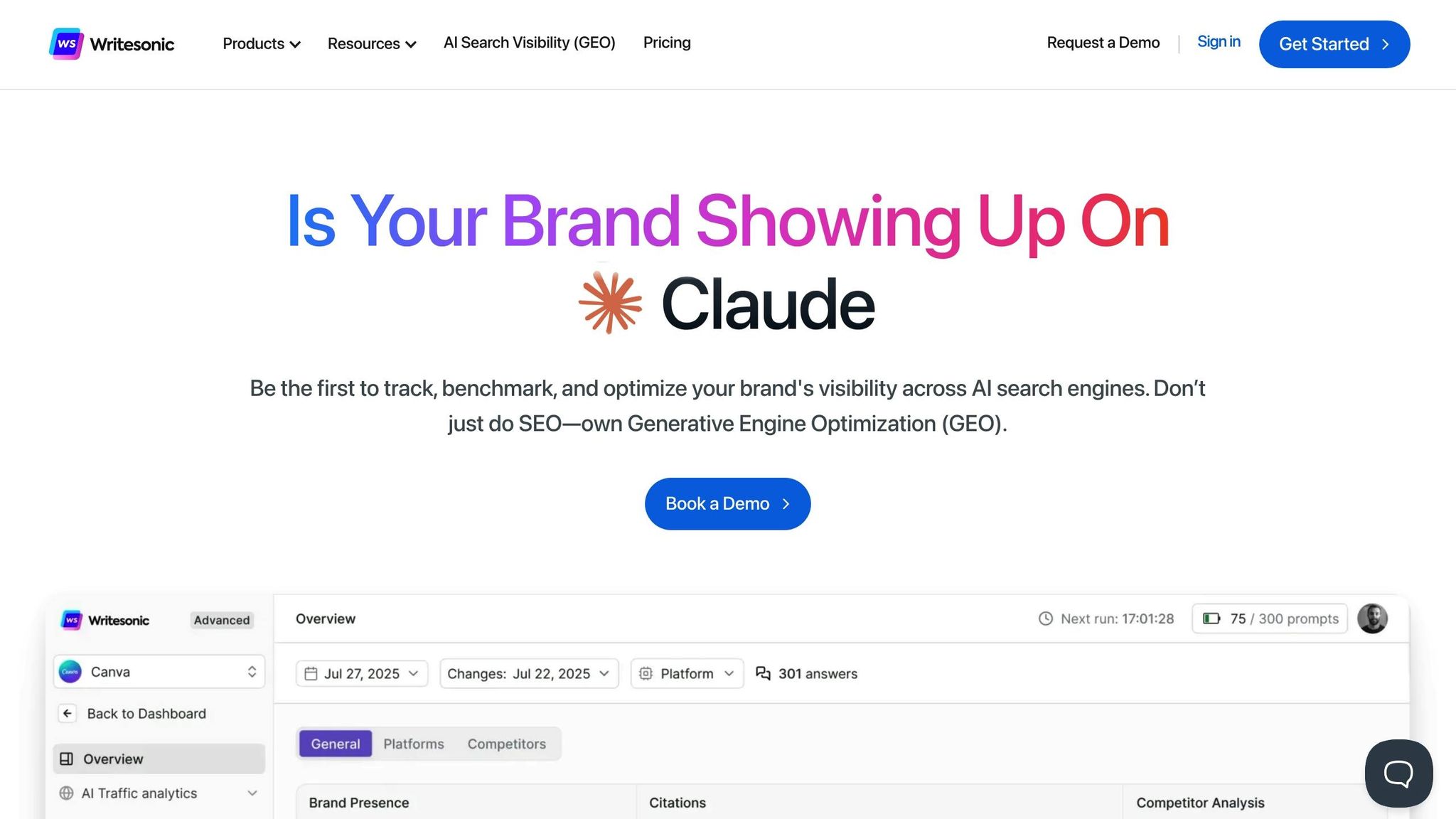
Writesonic brings a unique tool to the table with its Generative Engine Optimization (GEO) feature. This tool monitors how AI models interact with your brand - tracking how they crawl, cite, and represent your business across more than 10 platforms. These include ChatGPT, Google Gemini, Perplexity, Claude, Grok, Google AI Overviews, and Bing Copilot. By combining advanced tracking with detailed analytics, Writesonic aims to boost your brand’s visibility in AI-driven search environments.
AI Platform Coverage
Writesonic takes a different approach by focusing on prompt-level analytics. Instead of monitoring traditional keywords, it tracks entire conversational queries like "best CRM for remote startup." This approach mirrors how users naturally interact with AI platforms. The platform leverages a proprietary dataset of over 120 million chatbot conversations to refine its tracking capabilities. This makes it a powerful tool for aligning your AEO strategy with real-world AI usage patterns.
Real-Time Tracking and Analytics Capabilities
Writesonic also offers advanced features like real-time visibility scores, sentiment analysis, and citation tracking. These tools allow you to see which AI bots - such as OpenAI, Anthropic, and Perplexity - are crawling your site and accessing specific pages. This is made possible through a simple Cloudflare Worker integration that monitors crawler activity without slowing down your website.
Integration with Other Tools and Platforms
To enhance its functionality, Writesonic integrates seamlessly with Cloudflare for crawler tracking and connects with tools like Ahrefs and Google Keyword Planner. This ensures your SEO efforts are aligned with GEO strategies. Additionally, the platform adheres to strict compliance standards, including SOC 2 Type II, GDPR, and HIPAA.
Unique Features: Share-of-Voice and Citation Gap Analysis
Writesonic goes beyond basic tracking by providing tools like share-of-voice benchmarking and citation gap analysis. These features compare your brand’s presence against competitors by topic and identify high-authority sites that mention your competitors but not you. To make outreach easier, it even includes customizable templates. Dennis Yu, Co-founder, shared an impressive example of its impact:
"We landed two $100,000 clients who found us through ChatGPT. That's $200,000 in revenue directly from AI visibility".
7. XOFU
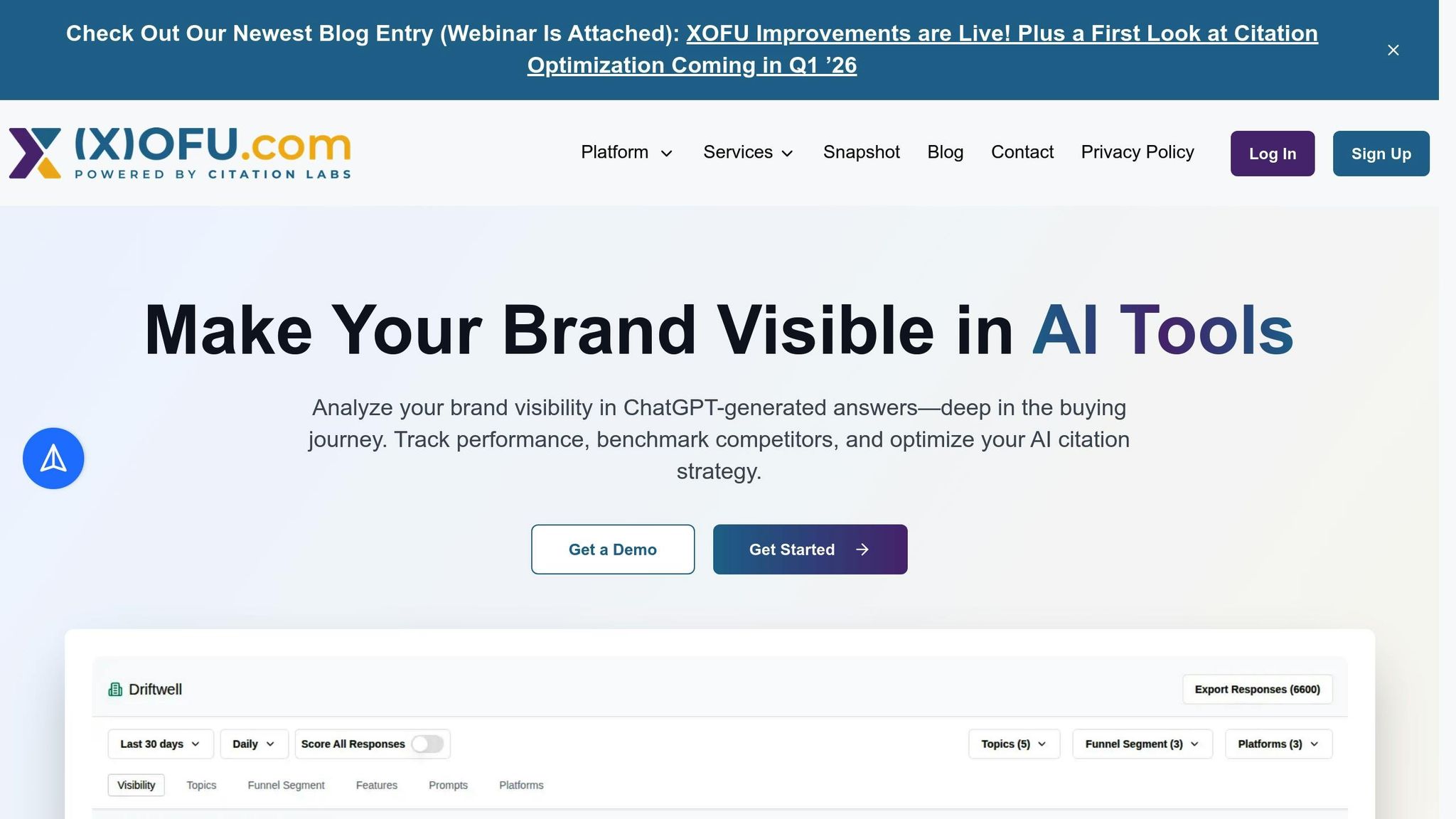
XOFU is a new tool designed to track brand visibility on AI-driven search platforms. While specific details about its features, platform compatibility, and integrations remain scarce, it shows promise as a resource for monitoring website performance and brand presence. As with similar tools, more in-depth research is needed to fully understand its capabilities. XOFU represents another step toward developing more advanced solutions in this space.
8. Peec AI
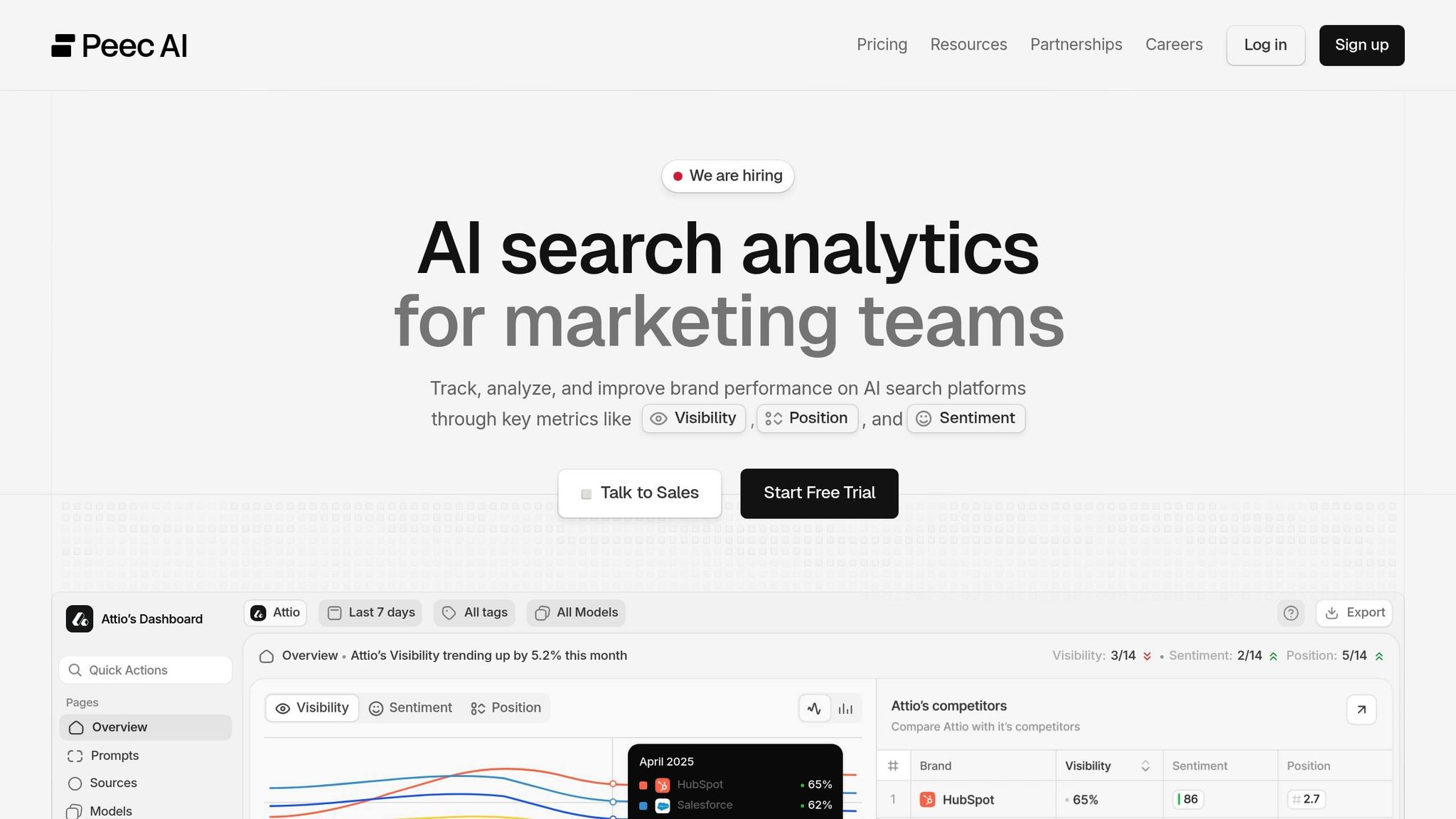
Peec AI is another noteworthy tool in the realm of AI search visibility, designed specifically for small-to-medium business (SMB) marketers and agencies. Launched in 2025 after securing a €5.2M seed round funding, the platform has quickly gained popularity, earning stellar ratings on OMR (4.9/5) and Slashdot (5/5).
AI Platform Coverage
Peec AI keeps tabs on brand mentions across platforms like ChatGPT, Perplexity, and Google AI Overviews as part of its standard plans. For those needing more extensive coverage, additional engines such as Gemini, Claude, DeepSeek, Llama, and Grok can be included via paid add-ons.
Real-Time Tracking and Analytics
This tool provides daily tracking that distinguishes between branded and non-branded prompts. It offers detailed prompt-level reporting on AI responses and generates a visibility score to monitor brand mentions and cited sources.
Standout Features
Peec AI includes sentiment analysis and share-of-voice metrics, but what truly sets it apart is its Pitch Workspaces. These allow agencies to share visibility reports seamlessly. Maddy Osman, Founder of The Blogsmith, highlighted this:
"Peec operates with a baseline layer of smart AI suggestions, offering ideas for the most relevant prompts and competitors to track".
Another valuable feature is the Looker Studio Connector, which integrates live visibility data into custom dashboards and enables easy export of reports.
Pricing starts at $95/month (€89) for up to 25 prompts and 2,250 answers. The Pro plan costs $199/month for 100 prompts, while Enterprise plans begin at $499/month, accommodating 300+ prompts.
9. Trackerly.AI
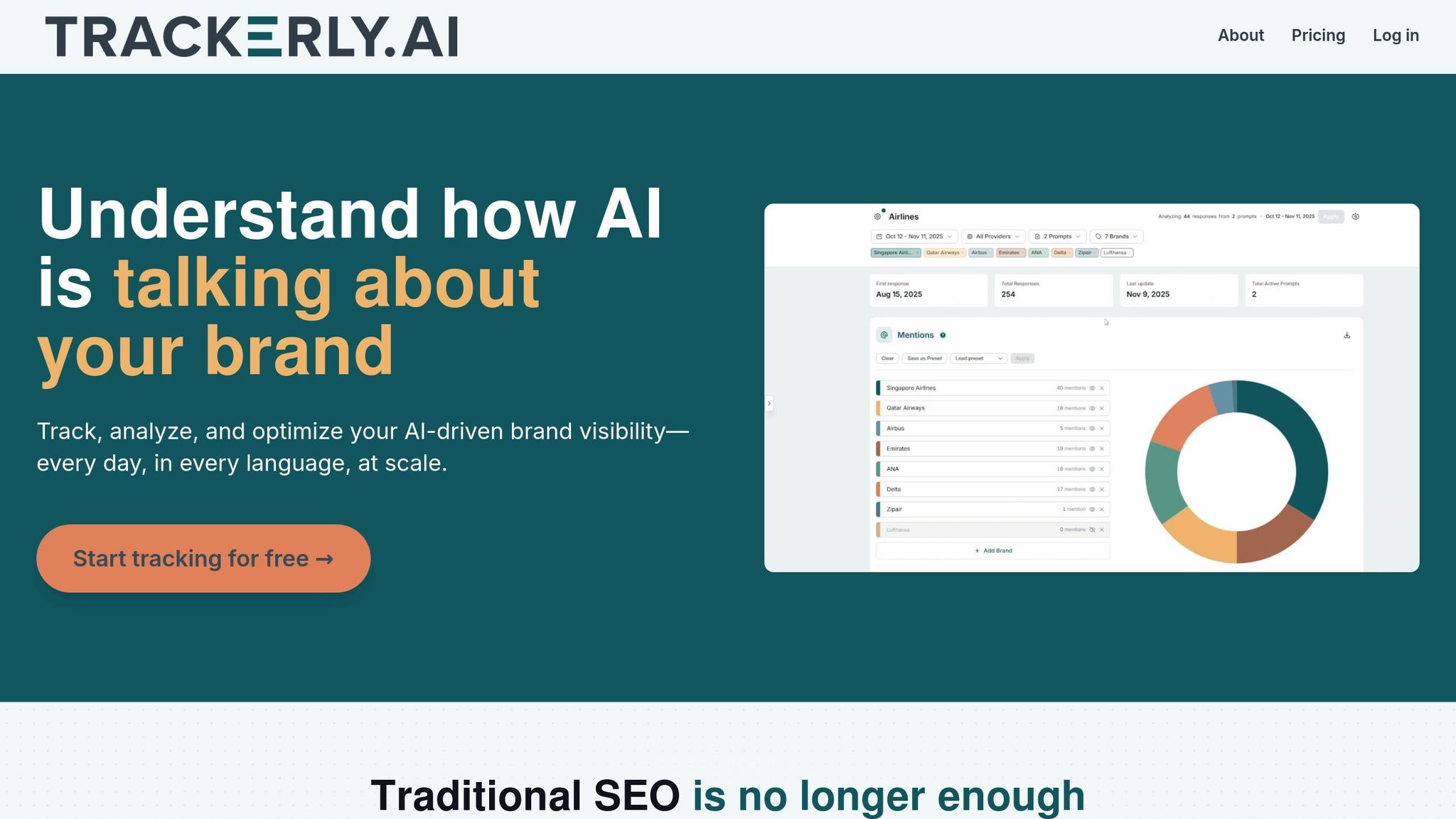
Trackerly.AI is a budget-friendly tool designed to help businesses monitor their brand visibility across various AI platforms. With its Growth plan starting at $97 per month, users get up to 42,000 credits, providing up to 66% savings on prompt-tracking costs compared to other options on the market.
AI Platform Coverage
As of November 2025, Trackerly.AI supports seven AI models: ChatGPT, Perplexity, Gemini, Google AI Mode, Google AI Overview, Claude, and Deepseek. Each model uses credits differently - ChatGPT requires 5 credits per query, Perplexity and Claude use 2 credits each, Google AI Mode takes 4 credits, and Deepseek, AI Overview, and Gemini only need 1 credit per query.
Real-Time Tracking and Analytics
Trackerly.AI automates daily tracking with flexible scheduling options, utilizing the native search capabilities of each AI model. It also offers localization in more than 60 countries and supports a wide variety of languages, making it a versatile choice for global users.
Seamless Integration with Other Tools
The platform includes an API that allows businesses to incorporate AI visibility data directly into their internal systems. Its bulk prompt management feature lets users upload hundreds of queries simultaneously, saving over 10 hours of manual effort. Additionally, users can track up to 20 keywords or phrases per group, streamlining the process of managing AI-driven brand visibility.
Standout Features
Trackerly.AI goes beyond basic tracking by offering a unique position tracking metric that confirms your brand’s presence in AI responses and pinpoints its exact placement. It also provides share-of-voice analysis and sentiment insights, helping users understand how AI models discuss their brand. To top it off, the platform displays the specific version of the AI model used for each response. Every plan includes a 7-day free trial, giving users a chance to explore its features before committing.
10. Litespace
Litespace doesn’t provide tools for tracking website visibility on AI search engines. Unlike some of the other platforms mentioned in this guide, there’s no verified information indicating that Litespace includes AI platform coverage, real-time tracking, or features tailored for answer engine optimization. This lack of details suggests that Litespace is likely focused on other functionalities.
If you’re looking to monitor your brand’s presence on platforms like ChatGPT, Perplexity, Claude, or Gemini, it’s essential to choose tools with proven capabilities. Look for tools that actively track relevant AI platforms and provide metrics such as citation tracking, sentiment analysis, or share-of-voice insights. A good tool will clearly outline its features and the AI models it supports, helping you avoid spending on solutions that don’t meet your specific needs.
Conclusion
Tracking your website's visibility in AI-driven search is no longer optional - it's a must if you want to stay ahead of the competition. Traditional SEO tools often overlook recommendations from platforms like ChatGPT, Perplexity, or Claude. And according to Gartner, this shift could lead to a 50% drop in organic search traffic by 2028 as AI tools take center stage in online discovery. With 83% of users favoring AI-generated answers over traditional search results, the stakes are higher than ever.
The tools highlighted in this guide are designed to help you assess your position in the AI-powered buyer's journey. They can show you which competitors are being cited instead of your business, uncover the sentiment surrounding your brand, and identify content gaps that need attention. Overlooking these AI mentions could mean missing out on conversions.
These tools don’t just provide data - they offer actionable insights.
"If you're not measuring your AI search visibility, you miss critical opportunities to shape LLM discussions about your business." – Carry Burton, SEO Specialist, AUQ
To get started, experiment with free trials or basic plans. For example, AUQ's AI Search Ranking Tool is free, while Otterly AI offers a $29/month plan. Focus on tracking key prompts that align with your customers' searches and review the results weekly, as AI models and perceptions evolve constantly.
The tools discussed here bridge the gap between traditional SEO and the rapidly growing influence of AI. Whether you’re running a small business or managing an enterprise, the right monitoring tool can help you refine your content, address citation gaps, and ensure your brand shows up when it matters most.
FAQs
How do AI-powered search platforms change traditional SEO strategies?
AI-powered search platforms, driven by large language models (LLMs), don’t work like traditional search engines. Instead of just listing links based on keywords, they generate detailed responses, cite sources, and even mention brands directly in their answers. This means the game has changed - your focus should now be on ensuring your content is chosen as a trusted source, not just on keyword rankings.
Here’s the catch: standard rank trackers can’t fully capture how visible your brand is within these AI-generated responses.
To stay ahead, businesses need to focus on three key areas: citation relevance, topical authority, and conversational phrasing that matches how LLMs process and present information. Tools like xSeek can make a big difference by tracking real-time mentions, analyzing competitors, and helping you fine-tune your content for better AI visibility. Adapting to these shifts is essential to keeping your website relevant in this new search landscape.
What is Answer Engine Optimization (AEO), and how is it different from SEO?
Answer Engine Optimization (AEO) is all about tailoring your content for AI-driven platforms like ChatGPT and other large language models (LLMs). The goal? To ensure these platforms select, cite, and use your material when responding to user queries. AEO prioritizes making your content visible in AI-generated answers by tracking things like brand mentions, prompt triggers, and citation patterns. This way, your content is more likely to show up in conversational AI outputs.
On the other hand, traditional SEO focuses on improving your website's position on search engine results pages (SERPs) like Google and Bing. It revolves around strategies such as keyword optimization, building backlinks, and enhancing user experience to climb the rankings and attract clicks.
The key difference between the two lies in their focus and metrics. SEO aims at search engines and organic rankings, while AEO zeroes in on conversational AI and citation visibility. AEO often demands concise, clearly structured content that LLMs can easily process, alongside tools to track how frequently your brand is referenced in AI-generated responses.
What are the best tools to track my website's visibility in AI search engines?
To keep tabs on your website's visibility in AI search engines, it's essential to pick tools that match your objectives. One option worth considering is xSeek, which provides real-time tracking across leading AI platforms like OpenAI and Anthropic. Its live dashboard gives you a clear view of where your content shows up in large language model (LLM) responses, helping you stay on top of your brand’s performance.
When evaluating tools, focus on features like competitor analysis, customizable reports, and historical trend tracking. These can help you measure your visibility against competitors and uncover areas for growth. Also, take into account factors like pricing, user-friendliness, and compatibility with tools such as Google Analytics or CRMs. Prioritizing these elements will help you find the right solution to strengthen your brand’s visibility in AI-powered search results.